
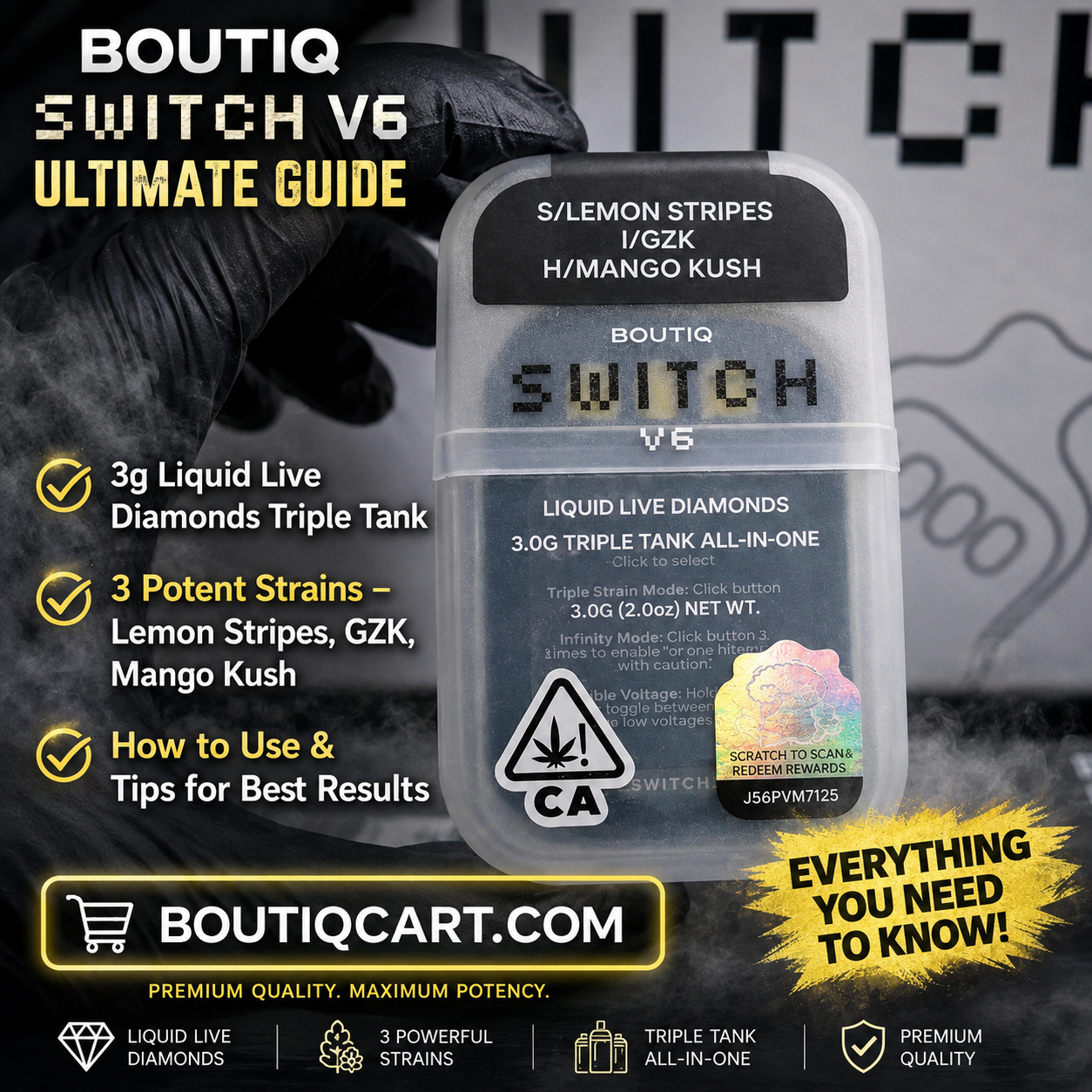
Boutiq Switch V6
Price range: $60.00 through $2,400.00
Boutiq Switch V6: What Six Generations of Iteration Produced
The Boutiq Switch V6 is the current generation of the Switch platform, and it is worth understanding what that means. Version numbers here are not annual marketing refreshes with a new colourway. Each generation addressed a specific engineering failure that the previous one exposed under real use, and V6 is the accumulated result of five rounds of that process.
The Problems Each Generation Solved
Understanding the lineage explains why V6 is built the way it is.
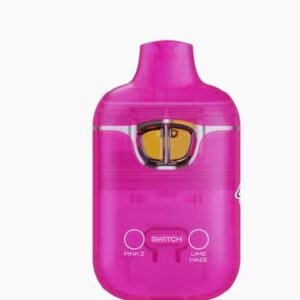
Early Switch devices proved the dual-chamber concept was desirable but exposed the sealing problem — a moving selector between two oil reservoirs is a leak waiting to happen. The V3 solved sealing and became the reliable baseline for the platform.
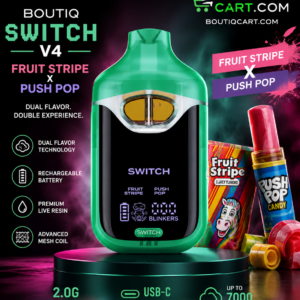
The V4 tackled ergonomics and airflow. V3 worked, but the draw resistance was inconsistent between chambers and the body shape encouraged sideways pocket carry. V4 corrected both.
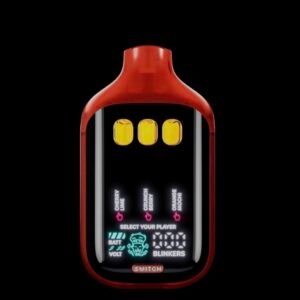
The V5 made the hardest jump — from two chambers to three. That required redesigning the selector entirely, because a three-position mechanism has tolerances a two-position one does not.
V6 concentrates on the thing all previous generations shared as a weakness: consistency of the experience from the first draw to the last.
Power Delivery Is the Real Upgrade
The headline improvement in V6 is not capacity or chamber count. It is how power reaches the coil across the life of the device.
Here is the problem every earlier generation had. A lithium cell does not deliver constant voltage. It starts high, sags through the middle of its discharge curve, and drops off sharply at the end. A device that simply connects the cell to the coil therefore delivers meaningfully different power at ten percent battery than at ninety percent. That is why so many disposables feel strong when fresh and weak before they are actually empty — the oil is fine, the voltage has fallen.
V6 regulates delivery so the coil receives consistent power regardless of where the cell sits on its discharge curve. The practical result is that a draw at the end of a charge cycle tastes and feels like a draw at the start. This is unglamorous engineering that does not photograph well, and it is the single largest improvement to the actual user experience in the platform’s history.
Coil and Chamber Refinements
The mesh coils carry over conceptually but with a finer mesh density, which spreads heat more evenly still and drops peak surface temperature further. Peak temperature is what scorches terpenes, so every reduction there is a direct gain in flavor retention across the tank.
The selector mechanism has tighter detents than V5, meaning it clicks decisively into position rather than allowing an ambiguous middle state. An ambiguous selector position is how partial cross-flow happens between chambers, and eliminating the ambiguity eliminates the symptom.
Airflow is tuned slightly more restricted than V4. That reads as a downgrade to anyone who equates open airflow with quality, but restriction is deliberate — it slows the draw, and a slower draw lets wicking keep pace with vaporization. Restricted airflow is a flavor decision.
Should You Buy V6 Over an Earlier Generation?
Not automatically, and it is worth being honest about that.
Buy V6 if consistency matters to you more than anything else — if the thing that has frustrated you about disposables is that they fade before they empty. That is precisely the problem this generation targets.
Buy V5 instead if maximum flavor variety is your priority. Three chambers in one device remains the strongest argument for that generation, and V6 does not supersede it on that axis.
Buy V3 instead if you want the simplest possible mechanism. Fewer moving parts means fewer things that can go wrong, and V3 remains the most mechanically straightforward device in the family.
The generation that suits you depends on which tradeoff you care about, not on which number is highest.
Using the Device Properly
Prime it. Stand the device upright for several minutes after unboxing so every wick saturates before any coil is fired. Firing a dry wick carbonizes it permanently and no subsequent care reverses that.
Draw slowly and steadily, four to six seconds. Rest ten to fifteen seconds between draws so the wick can resaturate. These two habits matter more to your experience than any specification on the box.
Charge in short sessions using a low-output adapter. Fast-charging bricks push more current than the cell was designed for, and the heat that generates sits directly against your extract.
Store upright, cool, and out of direct sun. Take one gentle draw after switching chambers to establish airflow before pulling normally.
Frequently Asked Questions
Is V6 backward compatible with anything? No. Like every device in the Switch family it is a sealed, self-contained unit. There are no shared parts, chargers aside.
How many chambers does V6 have? Configuration varies by release within the generation. Check the specific listing rather than assuming the chamber count from the version number alone.
Does the improved power delivery shorten battery life? Slightly, in terms of draws per charge, because regulation itself consumes a small amount of energy. In exchange those draws are consistent. Most users consider that a good trade.
Where do I see the full range? Browse the complete Boutiq catalog, or compare against the 2G disposable range for single-profile options.
For adult use only. Must be 21 or older to purchase. Keep out of reach of children and pets. Do not drive or operate machinery after use. These statements have not been evaluated by the FDA and this product is not intended to diagnose, treat, cure, or prevent any disease.
Flavor Selection on the V6 Platform
Because the V6 regulates power consistently across the discharge curve, flavor selection behaves differently on this generation than on earlier ones. On a device with sagging voltage, delicate profiles tend to read strongly at the start and disappear by the middle of the tank, which pushed many buyers toward heavier, more assertive strains that survived the fade. That compensation is no longer necessary.
In practice this means the lighter and more nuanced profiles finally perform as intended on V6. Citrus, herbal, and floral-leaning selections hold their character deep into the tank rather than flattening into generic sweetness. If you previously wrote off bright profiles in disposable format because they never lasted, this is the generation worth retrying them on.
Heavier gas, dessert, and OG profiles still work well and remain the right choice if that is your preference. They simply no longer hold the structural advantage they had on earlier hardware.
Recognising a Genuine V6
As the current generation, V6 attracts the most counterfeit attention in the range. Three checks are worth making before you buy.
First, verify the batch number on the packaging against a certificate of analysis the seller can produce on request. A generic lab report, or one that does not name your specific batch, is a marketing document rather than evidence.
Second, test the selector. A genuine V6 clicks firmly into each position with an unambiguous detent. A vague, loose, or sticky selector is the clearest mechanical tell of counterfeit hardware, because the tooling required to reproduce a precise detent is expensive and counterfeiters skip it.
Third, apply price sanity. Compliant hardware, tested extract, and regulated power delivery all carry real cost. A listing dramatically below the market means something was omitted from that chain, and testing is the item omitted most often.
| Flavors | Lemon Stripes x GZK x Mango Kush (sativa leaning), Texas Tea x Pecan Pie x Blue Banana (indica-leaning), Honey Dew x Lime Z x Pink Haze (sativa leaning), Jungle Juice x Zoap x Acai Mintz (Hybrid-balanced), Lemon Jelly x Pink Pineapple x Biscotti (indica-leaning), Pina Colada x Blueberry x Rainbow Melon (indica-leaning), King Louis OG x Hawaiian Snow x Tropical Haze (sativa-leaning), Pink Z x Dragon Fruits x Tropicana (sativa-leaning), Bberry x Pluto x Blue Mango (indica-leaning), Sour Tangie x NYC Sour x Passion Fruits (sativa-dominant), Blue Matcha x Acai Berry x Sour Slush (hybrid-balanced), Maui Wowie x Gelato 41 x Mango Lemon (sativa-leaning), Italian Ice x Lemon Cherry x Z Runtz (indica-leaning) |
|---|---|
| Quantity | 2, 5, 10, 15, 25, 50, 100, 200 |
Be the first to review “Boutiq Switch V6”
Related products
Boutiq Switch V4
Boutiq Switch V3

Boutiq Switch ORB V5 Disposable
Boutiq Switch V4
Boutiq Switch V3
Boutiq Switch V4

Boutiq Switch V4
Boutiq Switch V5
Reviews
There are no reviews yet.