
-
×
 Boutiq Switch Gum - 2 Mixed Flavors
1 × $60.00
Boutiq Switch Gum - 2 Mixed Flavors
1 × $60.00
Boutiq Switch News
How to Spot a Fake Boutiq Switch: A Buyer’s Authentication Guide
The most expensive mistake in this category is not buying the wrong flavor. It is buying something that was never made by the brand on the box. Counterfeit disposables are widespread, they have become genuinely good at imitating packaging, and the people selling them are counting on you not knowing what to look for. This guide gives you five checks that work.
Why This Brand Gets Copied
Counterfeiters follow demand. A brand only gets faked once it is popular enough that the name alone moves units, which is why the copies started appearing at roughly the point the range hit wider recognition. The economics are brutal in their simplicity: the packaging is cheap to reproduce, the hardware is cheap to source, and the filling is whatever the operation can buy at the lowest price.
That last part is the actual danger. A counterfeit is not a slightly worse version of the real thing. It is an unknown liquid in an unknown device, produced with no testing, no oversight and no accountability. Nobody can tell you what is in it, including the person selling it to you.
Check One: The Packaging and Seal
Counterfeit artwork has improved enormously. Colours match, logos are sharp, and a photograph of a fake box is often indistinguishable from the real one. What copies still struggle with is the physical construction.
Look at the seal rather than the print. Genuine packaging uses tooling that produces a consistent, clean seal in the same position on every unit. Counterfeit operations rarely invest in matching that tooling, so seals are frequently off-centre, uneven, or applied with visible adhesive spread. Check the box edges too — genuine cartons are die-cut cleanly, while copies often show slightly ragged folds.
Print quality is worth a second look under good light. Fakes tend to lose fine detail in small text and gradients, which is where reproduction breaks down first.
Check Two: Batch Code and Lab Results
This is the check that matters most, and the one most buyers skip.
Every legitimately produced unit carries a batch code, and that code should correspond to a certificate of analysis from a testing lab. The critical word is correspond. A seller who shows you a lab report that does not reference the batch code on your specific package has shown you a marketing document, not a test result.
Ask for a batch-matched COA before you buy. A genuine retailer can produce one. A seller who offers a generic report, a screenshot with the batch number cropped out, or an explanation of why they cannot provide it has answered your question, just not the way they intended.
Check Three: The Hardware Itself
Once the device is in your hand there are tells that packaging cannot fake.
Weight is the first. Genuine devices use a battery and housing of a specific spec, and counterfeits almost always come in lighter because cheaper cells and thinner housings are the easiest place to save money. If you have handled a real one, a fake feels immediately wrong.
Check the charge port. Genuine current-generation devices use USB-C, seated squarely in a cleanly finished cutout. Copies often show a port that sits slightly proud or recessed, with rough edges around the opening.
Then look at the extract through the window. Genuine material has a consistent colour and a viscosity that moves slowly when tilted. Anything unusually thin, unusually dark, cloudy, or separated into layers is a warning sign regardless of what the box says.
Check Four: The Price Signal
Extraction, testing, hardware and compliance all carry real cost, which puts a floor under what a genuine product can sell for. A listing dramatically below the going rate is telling you something true about itself.
There are legitimate reasons for a modest discount — clearing older stock, volume pricing, a genuine promotion. There is no legitimate reason for a price that undercuts the market by half. When the number looks too good, it is not a deal you found first.
Check Five: Where You Are Buying
Source is the single strongest predictor, and it is the one entirely within your control.
Buy from a retailer with a real storefront, published policies, a working contact route and traceable stock. Anonymous social media accounts, marketplace listings with no seller history, and sellers who will only communicate through disappearing messages are where the overwhelming majority of counterfeits move.
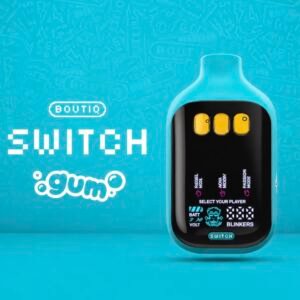
The full genuine range is listed in the Boutiq shop, including the Boutiq Switch Gum, the V5 series and the V6. Hardware and cartridge options are covered across the Boutiq Carts range.
If You Think Yours Is Fake
Stop using it. Do not finish it on the basis that you already paid for it — that reasoning has cost people a great deal more than the price of a device.
Photograph the packaging, the batch code and the device, then raise it with the seller and with the payment provider you used. Card payments and reputable platforms both offer recourse; cash sent through irreversible channels does not, which is itself a reason to be wary of sellers who insist on them.
The Short Version
Check the seal, demand a batch-matched COA, weigh the device in your hand, distrust prices that undercut the market, and buy from somewhere accountable. Four of those five cost you nothing but a minute of attention.
For adult use only. Must be 21 or older to purchase. Keep out of reach of children and pets. Do not drive or operate machinery after use. These statements have not been evaluated by the FDA and this product is not intended to diagnose, treat, cure, or prevent any disease.
