
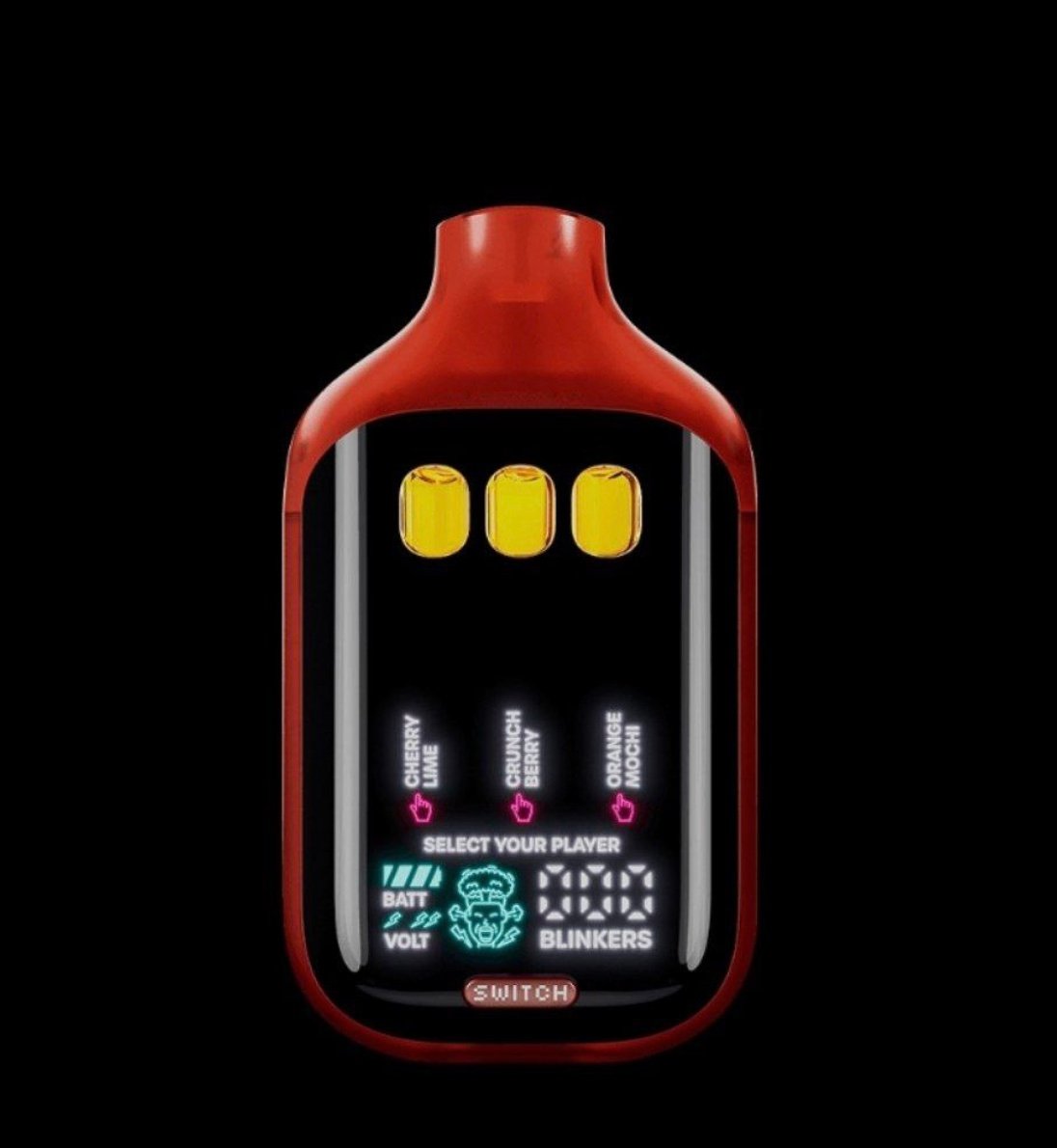

Cherry Lime x Crunch Berry x Orange Mochi: A Progression Rather Than a Set
Most three-chamber devices offer three parallel options. This one is arranged as a progression — sharp at one end, creamy at the other, and something in between — and using it in that order produces a noticeably better experience than switching at random.
That structure is what makes it one of the more thoughtfully assembled combinations in the V5 range.
Cherry Lime: The Sharp End
Cherry Lime is the brightest and most acidic of the three, and it functions as the palate opener.
The profile pairs a fresh, clean cherry with a genuine lime acidity rather than a sweet citrus. The lime is the more assertive of the two — zesty and rind-forward, with a drying quality on the finish that keeps the cherry from reading as candy.
Limonene dominates with terpinolene supplying the sharp top edge. Myrcene is minimal, which is precisely why this chamber feels light and quick with no lingering weight.
The acidity does functional work in this device. It resets the palate more effectively than either of the other two chambers, which makes it the right place to return to between sessions on the richer options.
Crunch Berry: Cereal Sweetness in the Middle
Crunch Berry sits between the two poles and belongs to the cereal-flavor family, which is a distinctive corner of extract design.
What separates a cereal profile from a plain berry one is a toasted, grain-adjacent note underneath the fruit — the impression of milk and cereal rather than of fresh berries. That toasted quality comes largely from caryophyllene interacting with a moderate myrcene presence, and it is what gives the chamber body without making it heavy.
Above that sits a mixed berry sweetness, rounder and less acidic than Cherry Lime, with a finish that lingers noticeably longer.
This is the middle position in the progression and the chamber most people use most often, because it is neither demanding nor forgettable.
Orange Mochi: The Creamy End
Orange Mochi is the fullest of the three and the natural finishing point.
The profile combines a soft, sweet orange — closer to orange cream than to citrus zest — with the dense, faintly rice-adjacent sweetness the mochi designation suggests. There is a genuine creaminess to the mouthfeel that neither of the other chambers approaches.
Myrcene sits heaviest here, supplying both the body and a mild settling quality. Limonene provides the orange, and linalool contributes a floral softness at the back end.
Of the three, this is the closest thing to an evening option, though it remains lighter than a genuine dessert or OG-family profile.
Using the Progression
The practical approach is to move from sharp toward creamy rather than switching arbitrarily.
Cherry Lime early, when your palate is fresh and its acidity registers fully. Crunch Berry through the middle of the day, where its balance of fruit and body suits most situations. Orange Mochi later, where the creaminess and the mild weight are assets.
Running the progression in reverse works poorly. After the density of Orange Mochi, the sharpness of Cherry Lime reads as thin rather than refreshing, because your palate is still coated.
Rotate across all three regularly regardless of preference. Extract sitting unused for weeks degrades slightly even in a sealed chamber, and a chamber ignored for a month will not taste as it should when you finally reach it.
Running the Device
Cherry Lime is the most heat-sensitive chamber, so calibrate to it. Its terpinolene-driven sharpness is the first casualty of a hot coil, and losing it turns the chamber into a fairly ordinary cherry profile.
Draw for four to six seconds, slowly. Rest fifteen seconds between draws. Do not use the device while warm from charging, and let it cool fully after a charge before drawing.
Prime before first use by standing the device upright for several minutes so all three wicks saturate — a chamber you will not touch for weeks still needs its wick wet before its first firing.
Take one gentle draw after each switch to establish flow in the dormant airway.
Charging and Storage
All three chambers draw from a single cell, recharged over USB-C. Battery life reflects combined use across all three rather than any one, so expect to charge more often than the per-chamber capacity would suggest.
Charge in short sessions with a low-output five-watt adapter rather than overnight on a fast-charging brick. Three chambers raise the odds of stranding oil when a cell dies, which makes disciplined charging more valuable here than on a two-chamber device.
Store upright, cool, and away from direct sunlight.
Comparable Devices
For a V5 combination that runs lighter throughout, Artic Frost x Rocket Pop x Tropic Haze has no creamy option. For the same three-chamber architecture in a rounded body, see the Boutiq Switch ORB V5. For two chambers with more capacity each, the V4 range is the alternative.
Frequently Asked Questions
What does a cereal profile actually taste like? Fruit over a toasted, grain-adjacent base — the impression of cereal and milk rather than of fresh berries.
Is Orange Mochi sedating? It is the heaviest of the three but still lighter than a true dessert or OG profile. Expect mild settling rather than genuine sedation.
Do I have to use them in order? No, but the progression from sharp to creamy works considerably better than the reverse.
Why does Cherry Lime taste flat? Heat has removed the terpinolene sharpness. Slow your draws and lengthen the gaps between them.
For adult use only. Must be 21 or older to purchase. Keep out of reach of children and pets. Do not drive or operate machinery after use. These statements have not been evaluated by the FDA and this product is not intended to diagnose, treat, cure, or prevent any disease.
Three Chambers and the Economics of Guessing Wrong
There is an argument for three-chamber devices that has nothing to do with variety for its own sake, and it is the strongest reason to consider one.
When you buy a single-profile device you are betting your entire capacity on one flavor being right for you across several weeks. If the bet fails — and it fails more often than people admit — you are left with a product you do not enjoy and no way to recover the cost. A two-chamber device halves that risk. A three-chamber device reduces it further.
The tradeoff is depth. Each profile is available in a smaller quantity, so if you already know exactly what you like, splitting capacity three ways works against you. Someone with settled preferences gets more value from committing everything to one profile they love.
The practical rule is straightforward. If you are still exploring, more chambers reduce your downside. If you know what you want, fewer chambers give you more of it. Buyers who are unsure which camp they are in should start here and pay attention to whether they end up rotating genuinely or simply defaulting to one chamber.
Be the first to review “BOUTIQ SWITCH V5 CHERRY LIME x CRUNCH BERRY x ORANGE MOCHI”
Related products

Boutiq Switch V5

Boutiq Switch V5

Boutiq Switch V6

Disposable
Boutiq Switch V4

Boutiq Switch V4
Boutiq Switch V3
Boutiq Switch V3
Reviews
There are no reviews yet.