
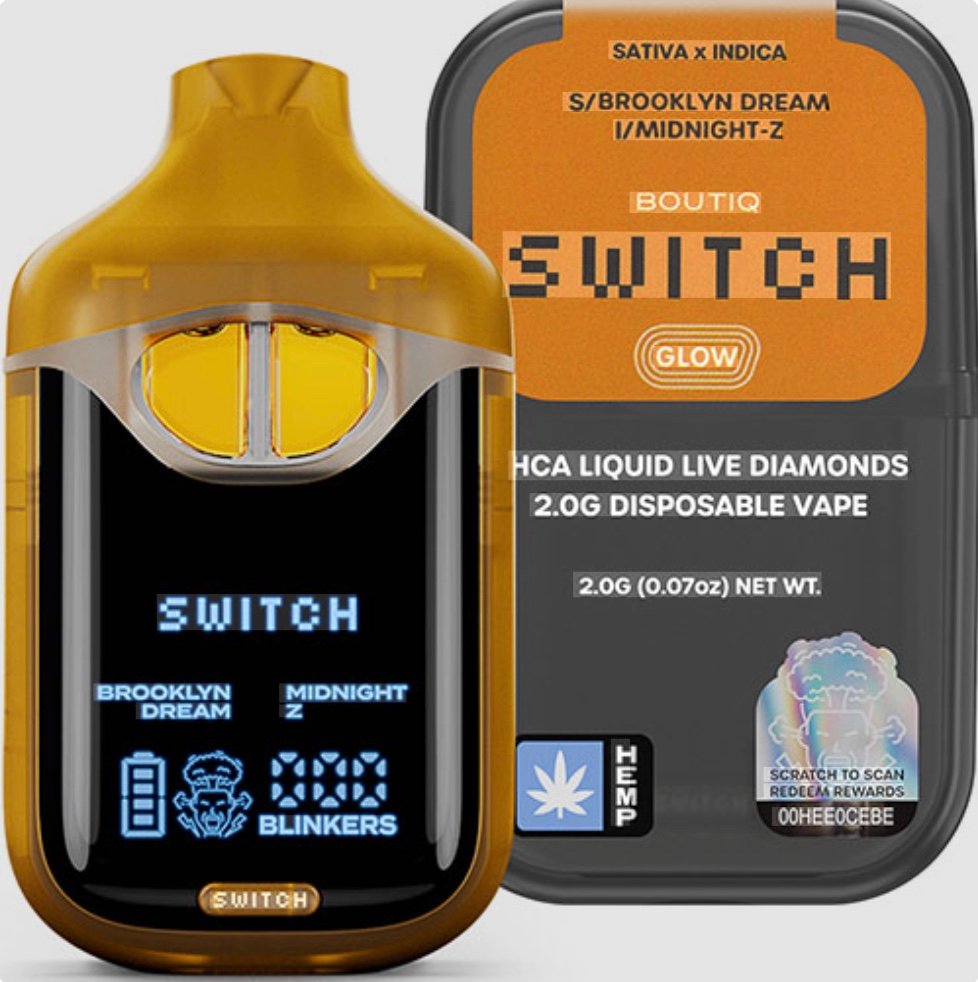
Boutiq Carts Price: A Buyer’s Guide to What Things Actually Cost
Anyone comparing Boutiq Carts price across sellers runs into the same confusion: the same product name appears at wildly different numbers, and there is no obvious explanation for the gap. The spread is real and it is explainable. This page breaks down what drives cost, how to compare listings honestly, and which price signals should make you walk away.
Compare Cost Per Gram, Not Sticker Price
The single most useful habit in this category is dividing price by capacity before comparing anything. A 2-gram device and a 1-gram cartridge are not competing products, and comparing their sticker prices tells you nothing.
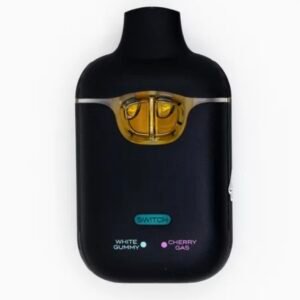
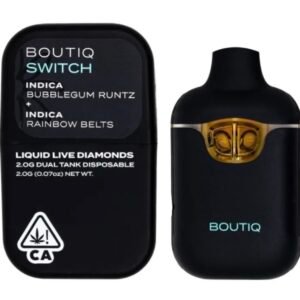
Work in cost per gram. A 2G device at a given price frequently lands at a lower per-gram cost than a 1G cartridge at half that price, because the hardware, coil, packaging, testing, and compliance costs are fixed per unit and get spread across twice the extract. Larger formats almost always win on per-gram math. That is why the Boutiq 2G Disposable reads as expensive on the shelf and cheap in the spreadsheet.
Then apply the correction most buyers skip: cost per gram delivered. A non-rechargeable 2G device that strands a third of its oil when the battery dies has an effective per-gram cost roughly fifty percent higher than its label suggests. Rechargeability is not a comfort feature, it is a price feature.
What Actually Sets the Price
Four inputs drive the number, and understanding them explains almost every listing you will see.
Input material. Extract made from fresh-frozen whole flower costs substantially more to produce than extract made from trim or from distillate reconstituted with botanical terpenes. This is the largest single variable and the one least visible on packaging.
Hardware. A ceramic-core cartridge with correctly sized intake ports and reliable seals costs several times what a generic wire-and-cotton assembly costs. It is also the difference between a cartridge that leaks in your pocket and one that does not.
Testing and compliance. Full-panel lab testing for potency, pesticides, residual solvents, and heavy metals is a real recurring cost per batch. Sellers who skip it operate with a structural cost advantage and pass a structural risk to you.
Distribution layers. Every intermediary between production and your hand adds margin. Shorter chains price better, which is the honest explanation for a legitimately lower number.
Why Listings Vary So Much
When you find the same product at very different prices, one of five things is true. The seller is clearing aging inventory, which is legitimate but means older extract with degraded terpenes. The seller buys at deeper volume and genuinely passes savings along. The seller is running a loss-leader to acquire customers. The seller is moving diverted or grey-market stock. Or the product is counterfeit.
The first three are fine. The last two are the reason the boutiq carts near me search needs care. Local urgency is exactly the condition under which people skip verification, and counterfeiters know it.
Price Signals That Should Stop You
A price dramatically below every other seller is not a bargain, it is information. Extraction, compliant hardware, and lab testing have a hard floor cost. Nobody sells sustainably beneath it. When a listing sits far under the market, something in the production chain was skipped, and the most commonly skipped item is testing.
Other signals worth treating as disqualifying: no batch number on the packaging; a certificate of analysis that is not batch-matched to the unit; a seller who becomes evasive when asked for lab results; and packaging inconsistencies against a unit you know to be genuine. Any one of these is enough to walk away from regardless of price.
Bulk and Volume Pricing
Per-unit cost drops meaningfully at case quantities, and the reasons are structural rather than promotional: packaging, freight, and handling are largely fixed per shipment rather than per unit. Master-case configurations such as the Boutiq Switch V2 Master Box exist for this reason.
Volume buying carries its own considerations that pure price comparison misses. Ask which batches will fill the order — a single-batch order behaves consistently, while a multi-batch order will vary unit to unit. Ask about storage conditions during transit, because heat degrades terpenes in ways no discount compensates for. And be realistic about turnover, since extract held too long loses the character you paid a premium for.
Reading Price Across Product Formats
Different formats price differently for defensible reasons. Concentrate wax typically shows the lowest cost per gram of active material because you are not paying for a battery, a coil, or a housing — you are buying extract and supplying the hardware yourself. Cartridges sit in the middle, bundling the coil and chamber but reusing your battery. Disposables cost most per gram because every unit includes a battery you will discard.
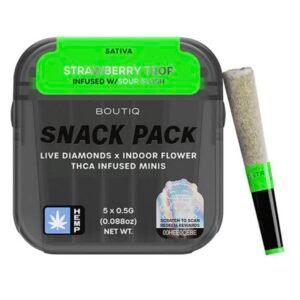
Infused pre-rolls and flower price on a different axis entirely and are not directly comparable on a per-gram basis, since the consumption method and bioavailability differ substantially.
The Practical Bottom Line
Buy on delivered cost per gram from a seller who will show you batch-matched lab results, not on sticker price from whoever is cheapest. The difference between a well-priced genuine product and a suspiciously cheap one is usually a single question the seller cannot answer. Ask it before you buy, not after.
Browse current inventory and pricing across the full Boutiq range to compare formats directly.
For adult use only. Must be 21 or older to purchase. Keep out of reach of children and pets. Do not drive or operate machinery after use. These statements have not been evaluated by the FDA and this product is not intended to diagnose, treat, cure, or prevent any disease.
Frequently Asked Questions About Boutiq Carts Price
Why is the same cart cheaper at one shop than another? Most often it is inventory age or distribution depth. A shop clearing older stock prices down because terpene quality degrades over time, and a shop buying at case volume genuinely pays less per unit. Neither is dishonest. What is dishonest is a price so far below the market that testing or authentic hardware must have been skipped to reach it.
Does a higher price guarantee better quality? No. Price correlates with quality but does not prove it. Plenty of overpriced product exists, particularly in markets with long distribution chains. Batch-matched lab results are proof; price is only a hint.
Is buying in bulk always cheaper? Per unit, yes. In practice, only if you can move the inventory before the extract loses character. Buying a year of supply to save fifteen percent is a false economy if the last third tastes flat by the time you reach it.
How should I compare a cartridge to a disposable on price? Convert both to cost per gram, then adjust for how much you will actually consume. Cartridges look more expensive per gram until you account for the fact that you reuse the battery indefinitely across many refills.
What is a fair price to expect? It varies by market, by capacity, and by local tax structure, which is why no honest guide publishes a single number. Compare at least three sellers, discard the outlier low, and verify lab results before buying from the rest.
Be the first to review “Boutiq Carts Price”
Related products
Boutiq Prerolls
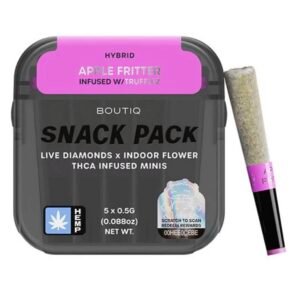
Boutiq Prerolls
Apple Fritter & Trufflez Boutiq Infused Mini THCA Prerolls 2.5G
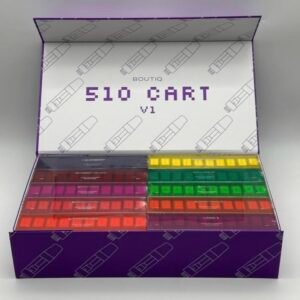
Boutiq 510 Cart V1
Boutiq Flowers
Boutiq Flowers
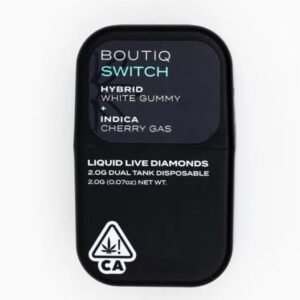
Disposable
Reviews
There are no reviews yet.