
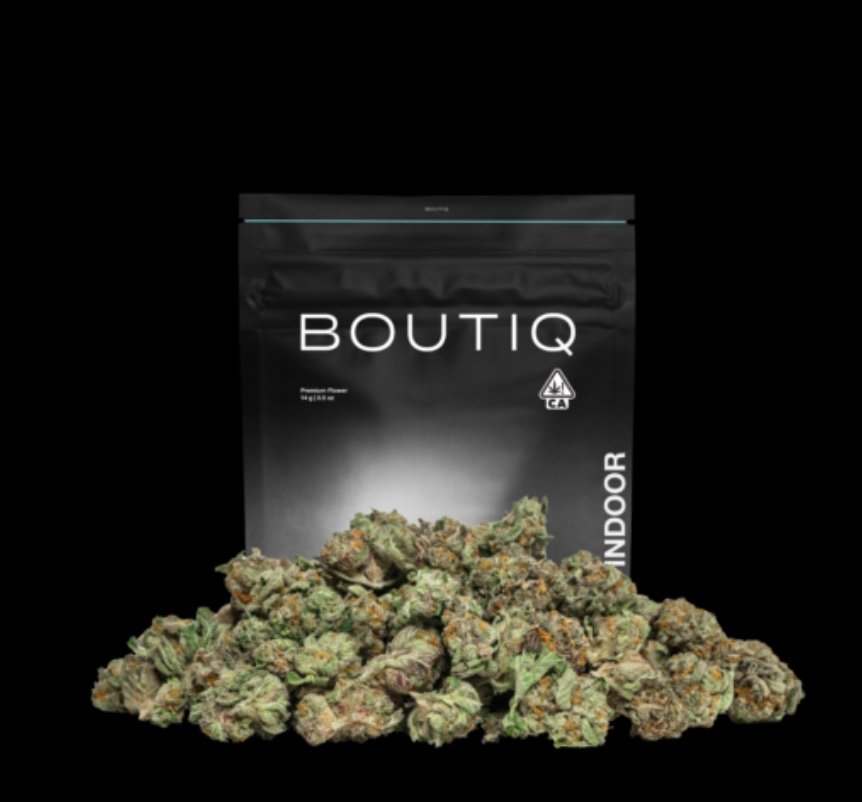
Boutiq White Tahoe Cookies Indoor Smalls 14g: Where OG Meets Dessert
White Tahoe Cookies is a crossroads strain. It sits between two lineages that normally produce very different results — the OG family, which delivers pine, fuel, and weight, and the cookie family, which delivers cream, sweetness, and dessert character. Strains that genuinely bridge those two are uncommon, and this is one of the better examples.
The Profile
The aroma opens on the OG side. Pine and a faint fuel note arrive first, with an earthy depth underneath that is unmistakably from that lineage. Nothing about the first impression suggests dessert.
The cookie character emerges on the exhale. A vanilla-cream sweetness comes through behind the pine, softening the edges and giving the finish a rounded quality that pure OG strains do not have. The two elements stay distinguishable rather than blending into a muddle, which is the mark of a well-executed cross.
Caryophyllene supplies the fuel and pepper. Humulene contributes the earthy, faintly savoury base. Limonene provides just enough brightness to lift the profile, and myrcene — present in quantity — is responsible for the weight.
This is a heavy strain. The dessert notes make it approachable, but the OG backbone means it settles firmly, and buyers who judge by flavor alone are frequently caught out by how much it slows them down.
Smalls: What You Are Actually Buying
Smalls refers to bud size and nothing else. It is not a quality grade, not a potency grade, and not a category for inferior material.
A plant produces buds of different sizes depending on their position. Top colas receive the most direct light and grow large. Lower and interior sites produce smaller buds from the same plant, the same genetics, the same feeding schedule, and the same cure. Chemically they are identical material.
Large buds carry a price premium because they photograph well and sell on appearance. Smalls are priced without that premium.
The practical point is that nearly everyone grinds flower before use, and the moment material enters a grinder bud size stops existing as a variable. Paying extra for large buds means paying for a visual property you destroy before consuming it.
Why Indoor Cultivation Matters Here
For a strain with this much terpene complexity, growing environment matters considerably more than bud size.
Terpene production responds directly to environmental conditions. Light spectrum, temperature stability, humidity, and airflow all influence which compounds a plant expresses and in what proportion. Variable outdoor conditions produce variable expression, which means the same genetics can taste noticeably different season to season.
A strain that depends on a balance between two competing character sets — pine and fuel on one side, cream and sweetness on the other — is particularly vulnerable to that variability. Push the balance either way and you lose what makes it distinctive.
Controlled indoor conditions hold the balance steady, which is why indoor material delivers the same profile batch after batch. For a regular buyer that consistency is worth more than any cosmetic grading.
Storage and Handling
Flower degrades faster than any other format, and storage determines most of your experience beyond the first week.
Humidity is the critical variable. Too dry and the material turns brittle, burns hot and harsh, and sheds terpenes quickly. Too damp and mould becomes a genuine risk. The workable range is roughly 55 to 65 percent relative humidity, and a two-way humidity pack in the container holds it without attention.
Store in an opaque, airtight container in a cool cupboard. Light is a major cause of terpene loss, which makes the attractive clear jar on an open shelf the worst common storage choice.
Handle as little as possible. Trichomes — where the cannabinoids and terpenes actually live — detach easily, and every handling knocks some off.
Working Through 14 Grams
A half-ounce lasts most people weeks rather than days, so storage discipline compounds over the purchase.
Decant a few days’ supply into a smaller container and keep the bulk sealed. Every opening of the main container exchanges air and accelerates drying, so limiting those openings meaningfully preserves the remainder.
Grind immediately before use rather than in advance. Ground flower exposes vastly more surface area to air and degrades within days rather than weeks.
Where It Sits in the Range
Within the Boutiq flower range, White Tahoe Cookies is the heaviest option and the most evening-appropriate. Blue Magic is fruit-forward and lighter, while Cereal Runtz sits in sweeter candy territory. For full-size premium buds rather than smalls, see Boutiq Blox.
For comparable OG-and-dessert character in vape format, King Louis OG x Italian Ice covers similar ground.
Frequently Asked Questions
Are smalls weaker than regular buds? No. Same plants, same cure, same genetics. Only size differs.
Is this a daytime strain? No. The OG backbone and myrcene content make it firmly an evening choice.
Does it taste more like OG or more like cookies? OG on the inhale, cookies on the exhale. Both stay distinguishable.
How much is 14g? A half ounce.
How should I store it? Airtight, opaque, cool, with a humidity pack holding 55 to 65 percent.
For adult use only. Must be 21 or older to purchase. Keep out of reach of children and pets. Do not drive or operate machinery after use. These statements have not been evaluated by the FDA and this product is not intended to diagnose, treat, cure, or prevent any disease.
Reading a Cross Before You Buy It
White Tahoe Cookies is a useful example of something worth understanding generally, because it lets you predict what an unfamiliar strain will be like from its name alone.
Most modern strains are crosses, and the parent lineages contribute reliably. OG in a name signals pine, fuel, earth, and significant weight. Cookie or Gelato signals cream, sweetness, and dessert body. Haze signals bright herbal terpinolene character and a clear-headed effect. Diesel or Chem signals pungency. Z or Runtz signals layered candy sweetness.
When two of those appear in one name, you can usually predict the result: the profile will carry both character sets, with the effect weighted toward whichever parent contributes more myrcene. Here, OG supplies the myrcene, which is why a strain with dessert notes still lands heavy.
This is more reliable than reading flavor descriptions, because lineage terms are reasonably standardised across the industry while flavor language is not. Two producers describing the same material will use different tasting notes but the same lineage terms.
The practical habit is to read the name for lineage first and the flavor description second. You will guess right far more often than buyers who work the other way round.
Assessing Cure Quality Yourself
Cure quality varies between producers more than potency does and affects your experience considerably more, yet it is rarely mentioned on packaging. You can assess it without equipment.
Well-cured flower has a specific aroma that matches its strain description rather than a vague green smell. It feels slightly springy when pressed — neither brittle nor damp. And the smoke is smooth rather than scratchy at the back of the throat.
Material that crumbles to dust was dried too fast. Material that smells faintly of hay lost its terpenes during drying. Material that bites harshly on the exhale retains chlorophyll, which a proper slow cure would have broken down. Any of the three tells you more about what your session will be like than a potency figure does.
Be the first to review “Boutiq White Tahoe Cookies Indoor Smalls 14g”
Related products

Boutiq Switch V4

Boutiq 510 Cart V1

Disposable

Boutiq Prerolls

Boutiq Switch V4

Boutiq Switch V5
Boutiq Switch V4
Reviews
There are no reviews yet.