
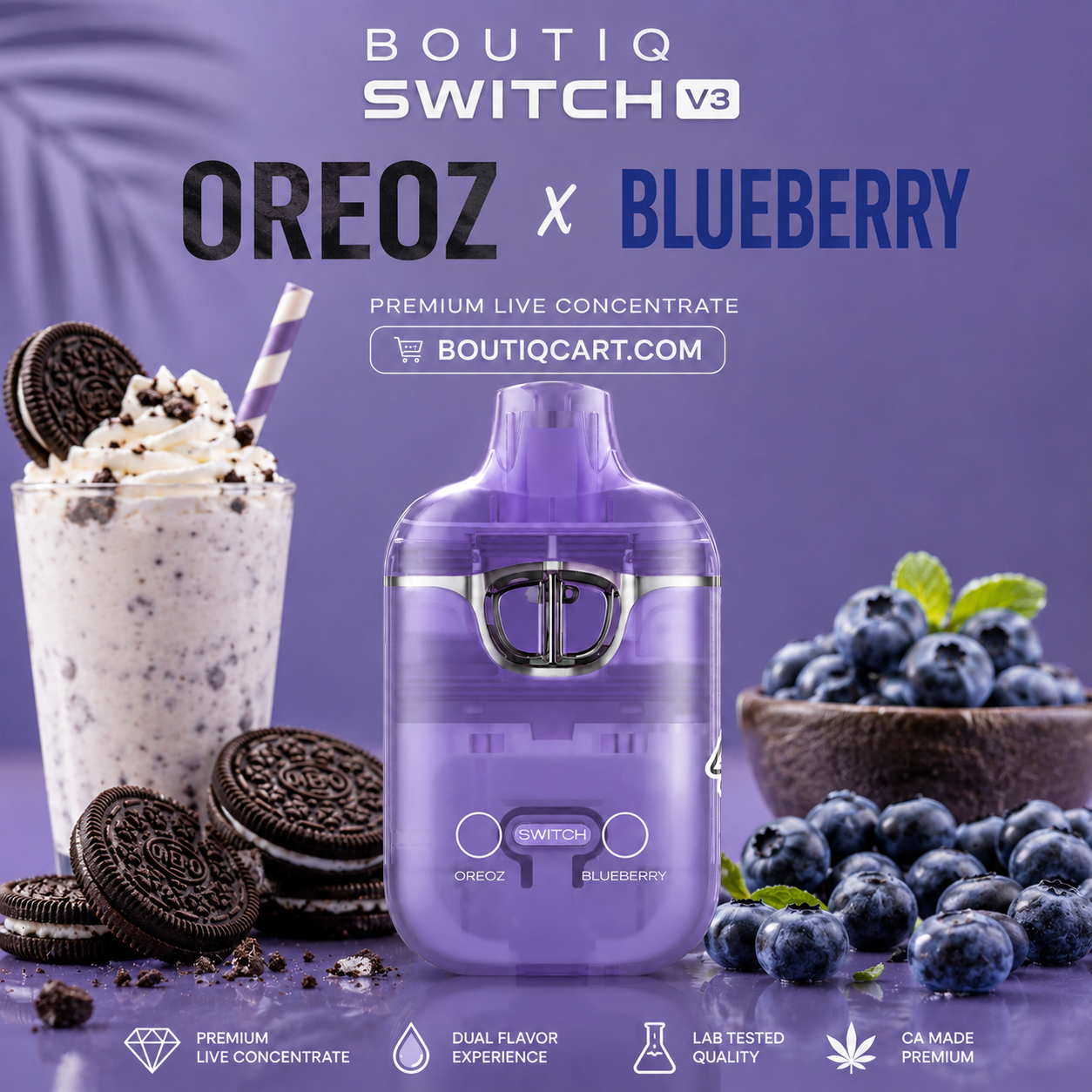

Oreoz x Blueberry: Why Cookie Strains Took Over
Dessert profiles dominate the modern extract market, and it is worth understanding why before deciding whether this device suits you. The reason is not simply that people like sweet things. It is that the cookie lineage produces a specific combination — richness with genuine weight behind it — that most other flavor families cannot deliver at the same time.
Fruit profiles taste good but usually feel light. Gas profiles feel heavy but taste divisive. Cookie-derived strains such as Oreoz manage both, and that dual capability is why they have held the market for as long as they have.
Oreoz: Where the Cream Note Comes From
The most distinctive thing about Oreoz is not the chocolate note, it is the cream. Plenty of strains taste vaguely of cocoa. Very few produce a genuine dairy-adjacent roundness, and that is the characteristic that makes this profile recognisable.
That creaminess is a perceptual effect rather than a literal dairy compound. It arises from the interaction of a strong caryophyllene presence with humulene and a full myrcene backbone — the combination produces a mouthfeel the brain interprets as fatty and rounded. This is also why the effect is so sensitive to temperature: disturb the balance by burning off the lighter contributors and the perception collapses into plain sweetness.
The chocolate character comes largely from humulene, the same compound that gives hops their earthy, faintly savoury depth. It is what stops the profile reading as candy.
Oreoz is heavier in effect than most dessert strains, which regularly surprises people. The myrcene content is substantial and it settles.
Blueberry: The Profile That Never Needed Updating
Blueberry is among the oldest stable flavor profiles in cannabis and it has survived every fashion cycle since. That longevity is not nostalgia — it is that the profile is clean, immediately recognisable, and difficult to confuse with anything else.
Expect ripe blueberry with a light tartness and no artificial edge. The tartness matters more than it sounds, because it is what allows this chamber to function as a counterweight to the density of the Oreoz side.
Limonene lifts the top end and keeps the fruit reading as fresh rather than jammy. Myrcene is present but considerably lighter than in the cookie chamber, which is why this side feels mobile by comparison.
The Structural Argument for This Pairing
Rich profiles fatigue the palate. This is not a matter of preference, it is how taste adaptation works — sustained exposure to sweetness and fat reduces your sensitivity to both.
A device that commits two full grams to a dessert profile therefore has a built-in problem: many buyers stop enjoying it well before they finish it. An acidic counterpart solves that structurally rather than cosmetically. You switch to Blueberry not for novelty but to restore your ability to taste the Oreoz.
That is a genuine functional justification for a dual-chamber device, and it is the reason cookie-and-fruit pairings appear so consistently across the range.
What V3 Contributes
The V3 generation solved reliable chamber isolation across a moving selector, which is the hardest problem in a switching device and the one that defeated most earlier attempts.
Isolation matters specifically here because dessert profiles are assertive. A trace of Oreoz bleeding into the Blueberry chamber would compromise the acidity that makes the pairing work, defeating the whole design. The counterweight only functions if it stays clean.
Both chambers run independent mesh coils, spreading heat across a broad surface rather than concentrating it along a filament, which keeps peak temperature low enough to protect the compounds carrying both profiles.
The Temperature Trap
Dessert profiles invite a specific mistake. Because they taste rich and heavy, people assume they are robust and run them hot. The assumption is backwards.
The cream perception in Oreoz depends on a balance between several compounds, and heat disrupts that balance by removing the lighter ones first. What remains is sugar without structure — the profile is still sweet, but the cookie and cream character that justified the purchase is gone.
Blueberry degrades more visibly, turning from fresh fruit toward a stewed, jammy note and eventually toward something faintly artificial.
Draw for four to six seconds, steadily. Rest ten to fifteen seconds between draws. Avoid using the device while warm from charging.
Setup, Charging and Storage
Prime before the first draw by standing the device upright for several minutes so both wicks fully saturate. A dry firing carbonizes the wick permanently.
Take one gentle draw after switching chambers to establish airflow in the dormant side.
Two grams total, recharged over USB-C. Charge in short sessions with a low-output adapter rather than overnight on a fast charger, since the cell sits directly against your extract and charging heat degrades terpenes even while the device is idle.
Store upright, cool, and away from direct sun.
Alternatives in the Same Direction
The same pairing on V2 hardware offers the identical flavors on the earlier platform. For a deeper dessert experience without a fruit counterweight, Apple Fritter x Trufflez pairs pastry against earthy cocoa. For a creamy profile with citrus rather than berry, Cactus Jack x Gelonade is the closer match.
Frequently Asked Questions
Is Oreoz heavier than it tastes? Yes, and this catches people out. The myrcene content is substantial and the effect settles more than the dessert flavor suggests.
Does the blueberry taste artificial? Not when run gently. Artificial berry character is a heat symptom rather than a property of the extract.
Why did my cream note disappear? The creaminess depends on a balance between compounds and heat destroys it by removing the lighter ones. Slow your draws and lengthen the gaps.
Which side should I use during the day? Blueberry, comfortably. Oreoz is better suited to the evening for most people.
For adult use only. Must be 21 or older to purchase. Keep out of reach of children and pets. Do not drive or operate machinery after use. These statements have not been evaluated by the FDA and this product is not intended to diagnose, treat, cure, or prevent any disease.
Be the first to review “Boutiq Switch V3 OREOZ X BLUEBERRY”
Related products
Boutiq Switch V4
Boutiq Switch Gum Edition
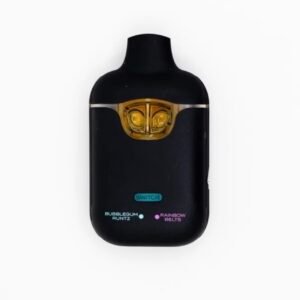
Disposable
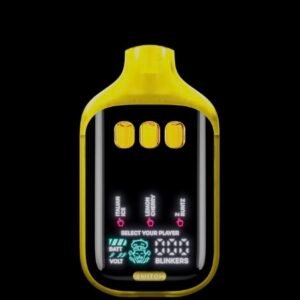
Boutiq Switch V5
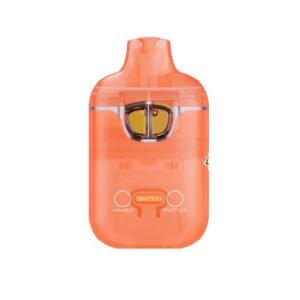
Boutiq Switch V3
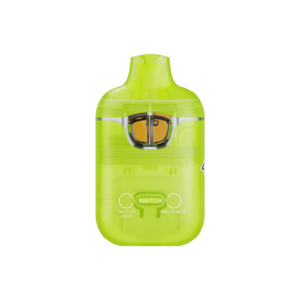
Boutiq Switch V3

Boutiq Switch V5
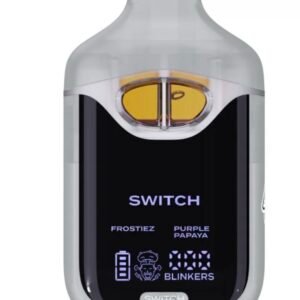
Boutiq Switch V4
Reviews
There are no reviews yet.